
Expanding Plastic-Free Festivals Across the US with Inland Ocean Ambassador Jade Sainz
Inland Ocean Coalition’s FestivalBlitz Plastic-Free Festival Campaign started in Colorado last year thanks to support from the Reiter Family Foundation. Our goals for the program as it began was to 1) understand how music festivals manage waste, with a special focus on plastics, 2) bring the ocean connection to waste reduction at outdoor events in Colorado, and 3) to make envisioning a more environmentally friendly future fun!
Music festivals bring upwards of thousands people together in a designated outdoor space to dance, connect, and listen to live music. Food trucks and audience activations make the events more fun and interactive for attendees, but the downside is that there are lots of single-use materials handed out, whether that’s branded swag or food containers. IOC works with the Ambassador network to check out festivals and log data about what’s being distributed, so that we can help vendors make better choices to provide attendees with plastic-free alternatives that are good for people and good for the planet.
We are always so excited to share the campaigns with our Inland Ocean Ambassadors, and even more excited when they take on these opportunities in their own communities! Jade Sainz from Atlanta, Georgia is the first Inland Ocean Ambassador to take FestivalBlitz outside the Colorado border at Shaky Knees!
Read about her experience east of the Mississippi to understand what we can learn from our festival visits, and how those lessons can be applied to festivals across the country.
TrashBlitzing Shaky Knees
Shaky Knees is an annual indie and rock music festival held in Atlanta, Georgia. Every year, it brings together great artists, and music lovers from Atlanta and beyond look forward to the lineup announcement.
I love music and I also love the ocean. After learning about the FestivalBlitz campaign and the TrashBlitz app during my Inland Ocean Ambassador Training Program, I saw an opportunity to bring these two together. I decided to go on a FestivalBlitz mission, to document the types of single-use plastics and other waste I encountered throughout the festival.
Along with my two good friends, I was ready for a weekend of great music, running back and forth between stages, checking out the merch, enjoying food and drinks, and, of course, learning about the festival’s sustainability practices!
As soon as we entered, I noticed a “Rock and Recycle” stand. This is a program where festival-goers receive a recycling bag to collect aluminum materials. Once they fill up the bag, they get a limited-edition festival t-shirt!
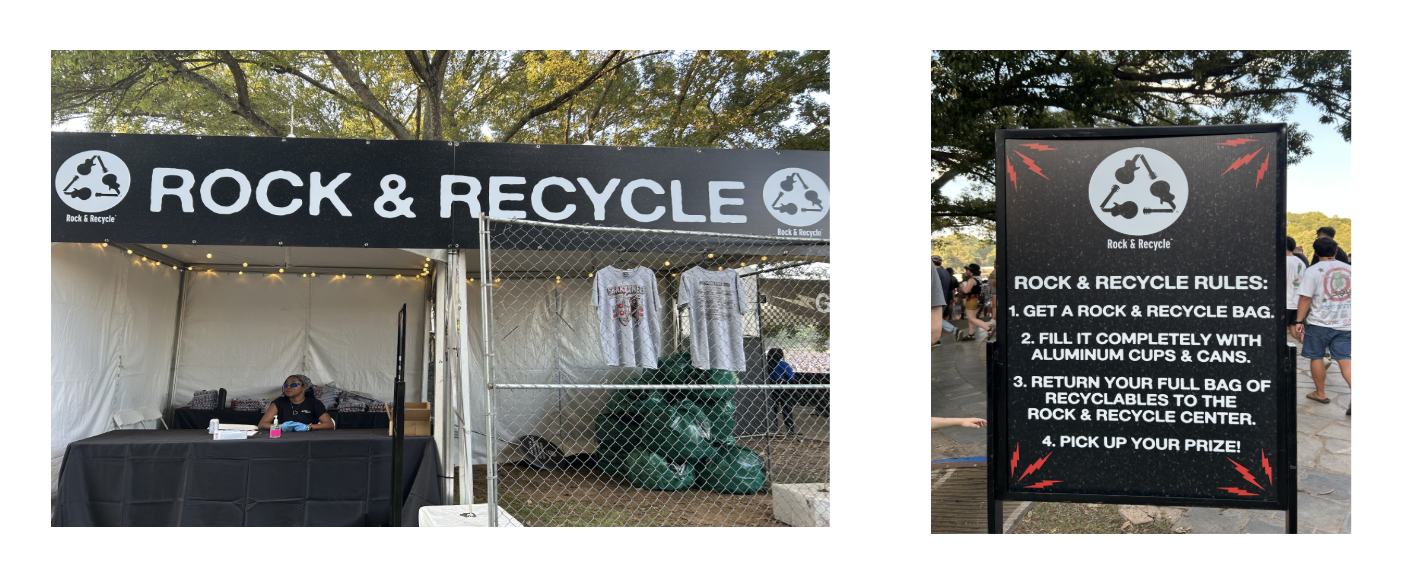
To my surprise, participants were beyond enthusiastic to participate! In fact, the bags were already gone by the time I got to the stand. DJ, who was working at the Rock & Recycle booth, recommended I come early the next day of the festival, because they run out fast.
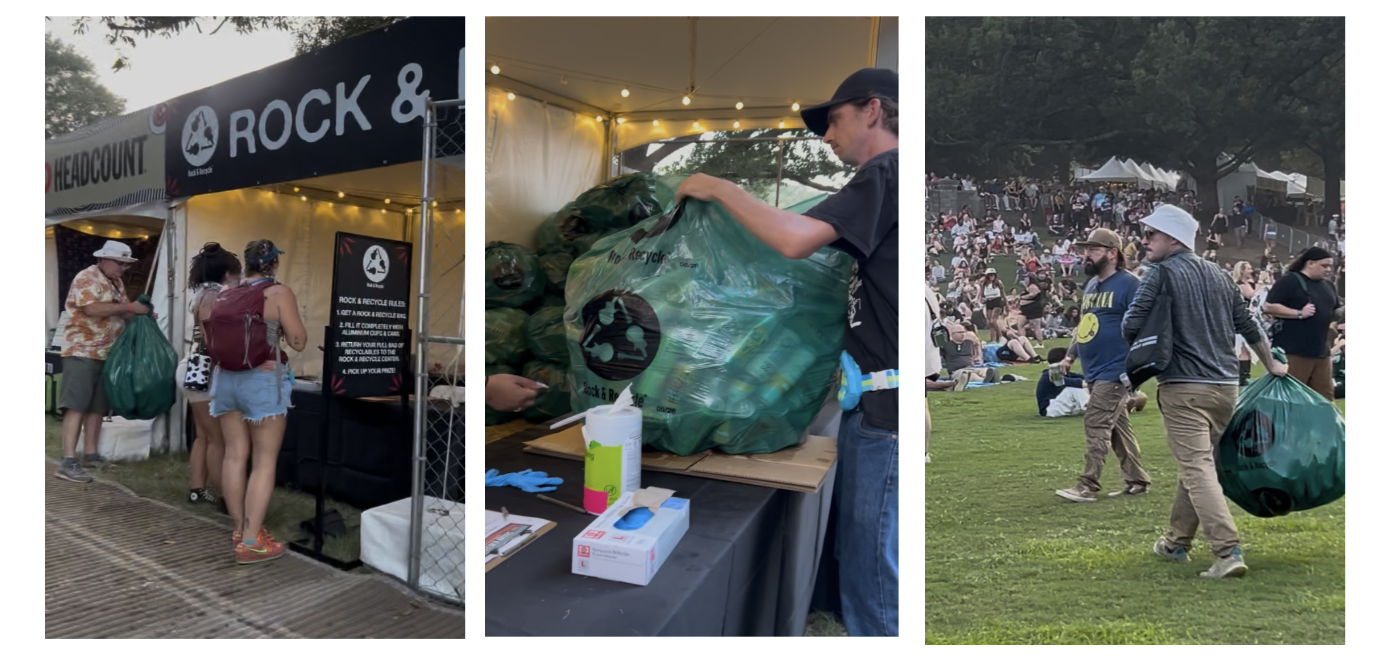
She mentioned that this program was developed by C3 Group, the general management company that organizes different festivals including Shaky Knees, Bonnaroo, and Lollapalooza. It’s incredible to see how the event organizers show awareness of sustainability practices, and ways to get people to participate.
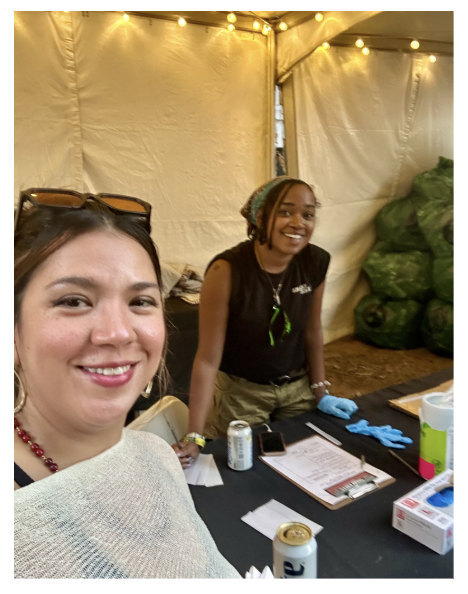
I asked DJ if she knew if the sustainability department at C3 would consider a similar program for plastics. If she had the chance to talk about it with her team, that could be awesome! According with some reports on sustainability practices, Loollapalooza does implement the Rock and Recycle program for collection of plastics, so it seems to be doable.
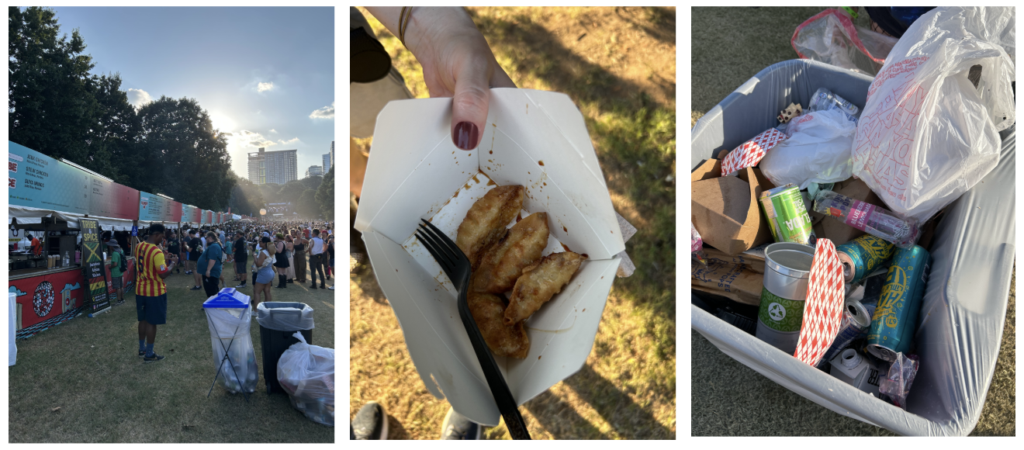
Early in the day, the grounds looked pretty clean, with well-marked recycling bins and trash cans everywhere. But of course, that can be because it was only the first day!
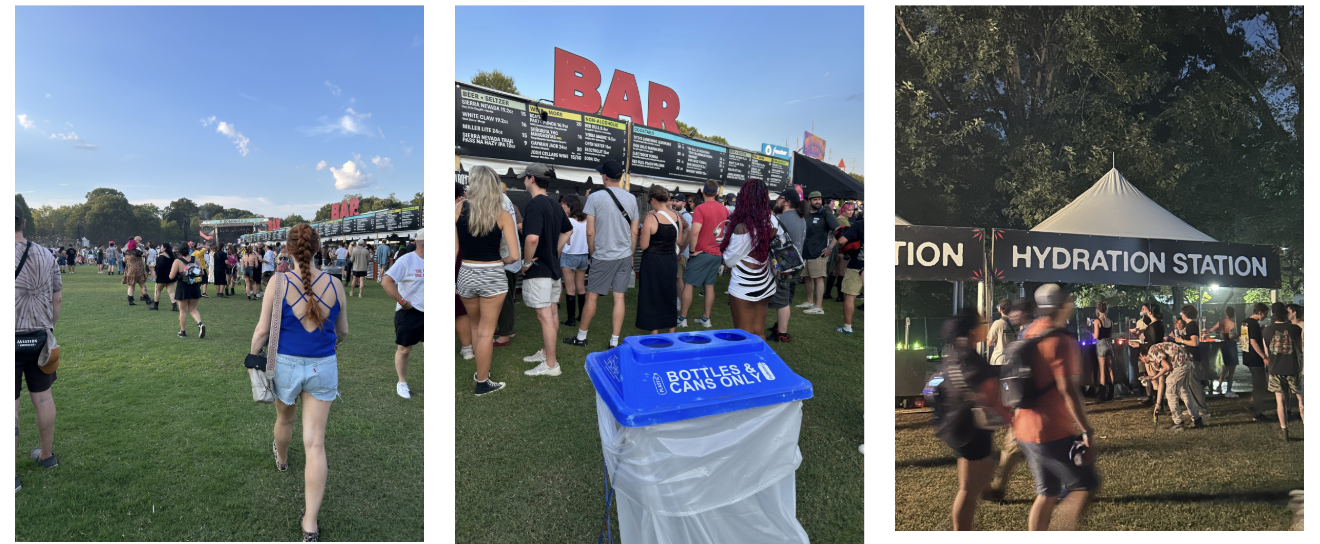
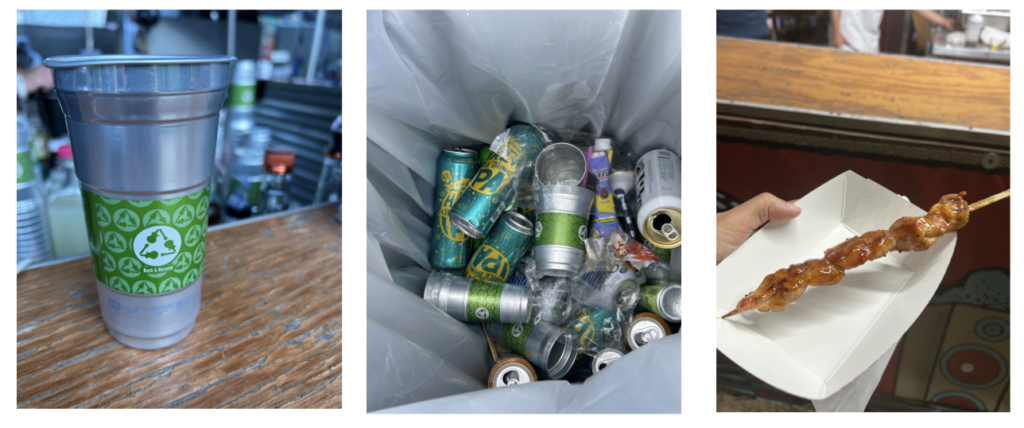
Drinks were provided mostly in aluminum cups, and aluminum cans. Hydration stations were around and people could bring empty bottles. Most food containers were made of cardboard and paper plates.
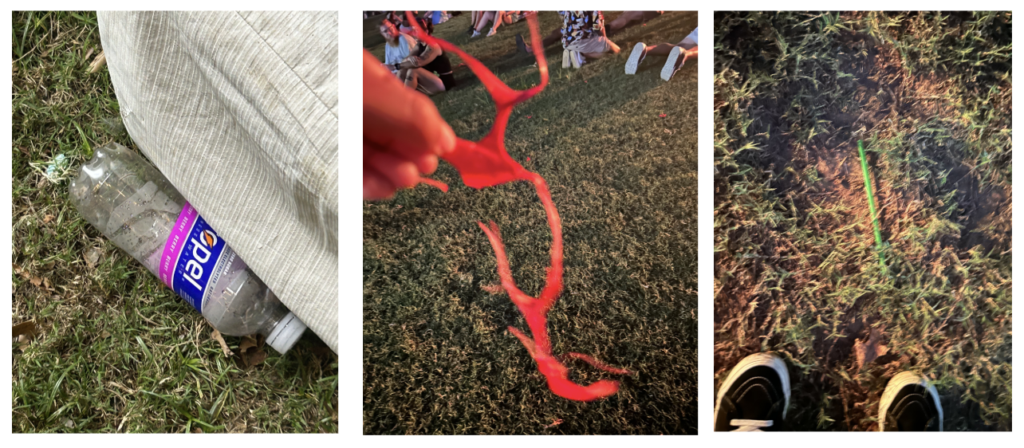
However, single used plastics were also seen in trash and ground, including wrappers, straws, water bottles.
As the festival went on, recyclable trash was mixed with single use plastics, and some styrofoam. It seemed like even the volunteer ‘recyclers’ helping out were not enough to keep up with the separation. As the night went on recycling bins overflowed. I am not sure if the plastics used in this festival were compostable.
My second day of the festival started strong. I was on my way from Bone-Thugs n Harmony to see a bit of Modest Mouse when a truck with a #partysustainability hashtag called my attention. The truck was from Pirani, selling personalized Insulated Stackable Tumblers. They cost $20 and there was a line to get them.
I continued surveying the trash around the food vendors’ areas: mostly paper, but there were tetrabrick, straws, plastic bags, plastic wrappers, and plastic cutlery as well. The TrashBlitz app recognized 7 types of items!
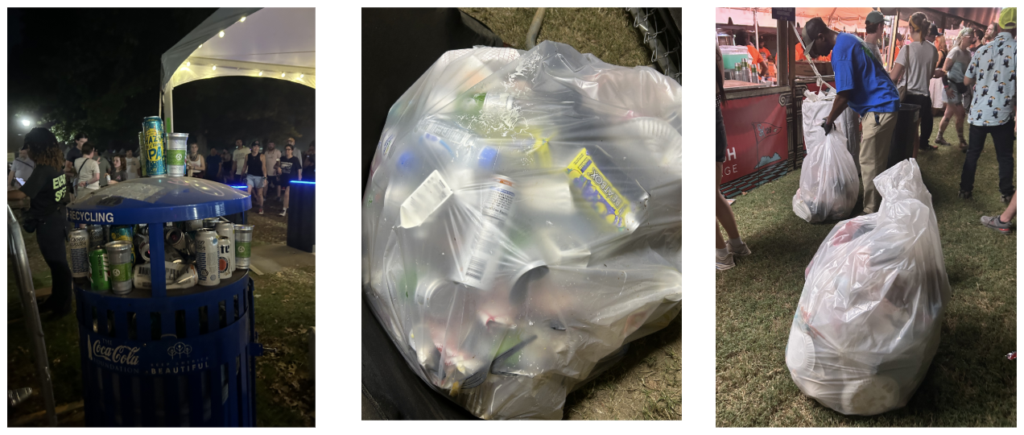
The recyclers of the “Rock and Recycle” were working hard. Some of them were digging through the trash cans, and a friend got upset because he thought they were cheating. I explained to him that this was a good thing, because they were sorting out the aluminum cans and cups from the other trash in these landfill trash cans.
In the area between the two bigger stages, where Wu-Tang Clan, then LCD SoundSystem and finally Gorillaz were going to play, I noticed people with plastic holders that could carry four cans at a time with ice. It was a great idea to save time in the lines, buying four drinks instead of one at a time! However, instead of reusing the carriers, many people threw them away (or littered them on the ground!), making these holders another example of single-use plastic.
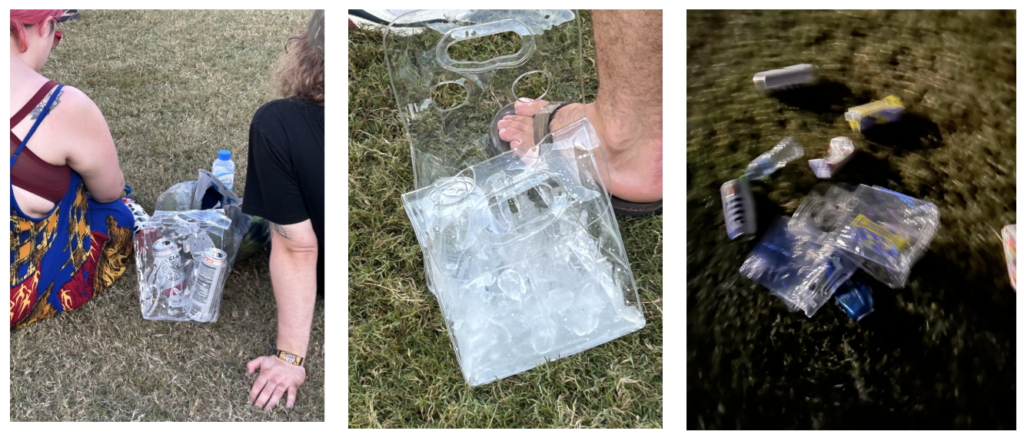
It would be great to see an incentivized return system, like if people could get a dollar back for returning their plastic drink carriers.
We headed out to the exit when the headliner, Gorillaz finished their act. On our way out, I could see lots of trash on the ground, and many trash cans were overflowing. The trash collection and all the rest of the clean up will be done by workers of the Whitten Management Inc., a company, which I’ve seen serving as waste management for several festivals in the Atlanta Metro area.
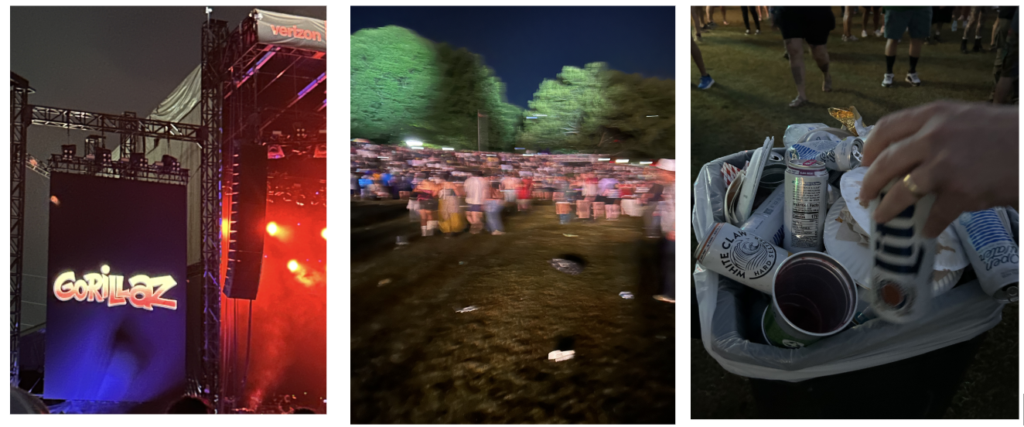
Reflecting on the festival, offering aluminum reusable cups, and engaging concert-goers in trash and recycling programs like ‘Rock and Recycle’ are great starts to get people involved in taking care of outdoor spaces and promoting awareness. While it may just make a dent in the total amount of trash generated by the festival, the enthusiasm of the festival attendees shows how much people really want to do right by the environment. With Inland Ocean Coalition, I am hopeful that we can show festival organizers how much participants want sustainable action and how easy it can be to implement programs that work!

Jade Sainz is a biologist from the coastal state of Sinaloa, Mexico, where seafood and spending time by the sea are deeply rooted in the local culture. She holds a master’s degree and a PhD in Environmental Science and Management from UC Santa Barbara, where she focused on marine conservation and aquaculture planning in the context of climate. She now lives in Atlanta, Georgia, about 250 miles from the coast, but she suspects her love for the ocean only grows stronger with distance. Jade graduated from the Inland Ocean Ambassador training program in Fall 2026.
