Reflections from Davos: Transformative Change and Our Connection to Nature
By Vicki Nichols Goldstein
I recently had the privilege of attending the World Biodiversity Forum (WBF) in Davos, Switzerland, where I was inspired by presentations and conversations about the Transformative Change Assessment. While the forum explored biodiversity, climate change, and sustainability, one message stood out above all others: addressing today’s environmental challenges requires more than new technologies or policies. It requires transforming how we think, how our institutions function, and how we relate to nature.
The Transformative Change Assessment, developed by the Intergovernmental Science-Policy Platform on Biodiversity and Ecosystem Services (IPBES), examines the fundamental changes needed in our values, governance, economies, and societies to halt biodiversity loss and create a more just and sustainable future. It challenges us to look at our views, structures, and practices—how we understand the world, how we organize our institutions, and how we live within them.
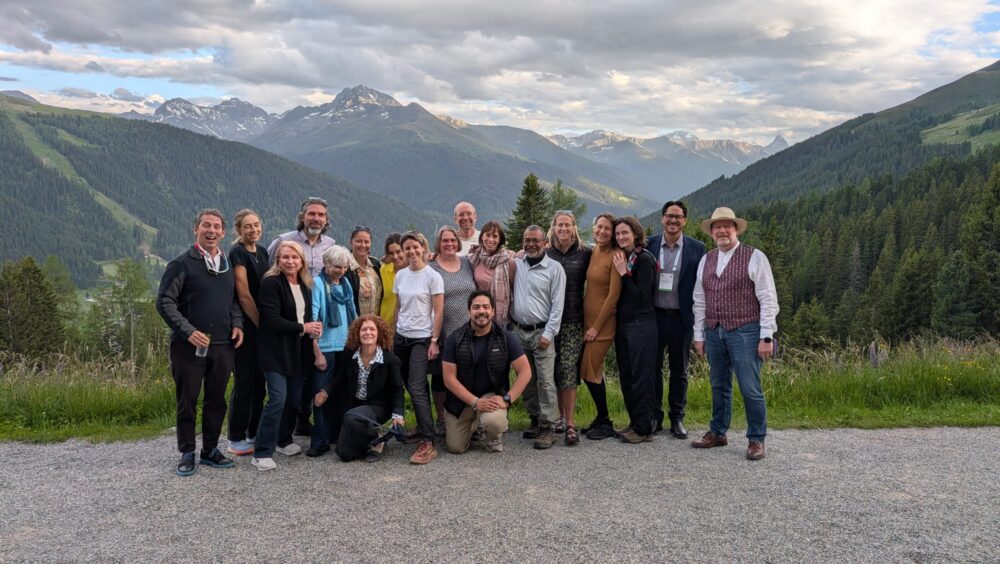
One of the highlights of the forum was having the privilege of getting to know and spending time with many of the authors of the assessment. Hearing firsthand about their work, their passion, and the collaborative process behind the report made its message even more meaningful to me.
One of the strongest themes throughout the forum was that humans are not separate from nature—we are part of it. Many of our environmental challenges come from treating nature as something outside ourselves rather than recognizing that our health and well-being depend upon healthy ecosystems. The discussions challenged us to embrace multiple ways of knowing—including Indigenous and local knowledge—and to consider the well-being of both people and the rest of the living world when making decisions.
Those ideas resonated deeply because they reinforce what has always been at the heart of the Inland Ocean Coalition. The snow that falls in the Rocky Mountains becomes streams and rivers that eventually reach the ocean. The choices we make in inland communities can affect coastal and marine ecosystems thousands of miles away. Everything is connected, and helping people understand and act on those connections is at the core of our mission.
I returned from Davos both challenged and hopeful. The changes needed are significant, but I was surrounded by people from many cultures, disciplines, and parts of the world who are committed to finding a better path forward. The assessment reminds us that transformative change doesn’t happen only through governments or international agreements. It begins in communities, organizations, relationships, and in the choices each of us make.
That is where I believe the Inland Ocean Coalition has an important role to play. We can help people see themselves as part of nature, not separate from it. We can connect inland communities to the ocean through the rivers and watersheds that unite us. We can bring together scientists, educators, businesses, youth, Tribal and Indigenous leaders, policymakers, and community members to learn from one another and work toward shared solutions. And we can create opportunities for people to move beyond awareness to meaningful collective action.
I came home with a renewed sense of purpose. The conversations in Davos reminded me that transformative change is not someone else’s responsibility—it belongs to all of us. Every partnership we build, every conversation we start, every young person we inspire, and every watershed we help protect contributes to something much larger. That gives me hope, and I hope you’ll continue this journey with us.
